Posts

Intro to Digital Citizenship - Week 4 Reflection and Resources

Early in this course, we were asked to respond on the difference between citizenship and digital citizenship. This activity gave me the opportunity to really reflect on the topic and my own perspective. Through this I realized that to be a good citizen is to be a good digital citizen. Technology is a part of everything we do either directly or indirectly. I bring this all up because I made a similar realization this week on the topic of cyberbullying. Cyberbullying is bullying, in today’s world, there should not be a difference, and it is up to the adults in education to prioritize student’s understanding of the magnitude and ramifications associated with all bullying.  In Monica Lewinsky’s TedTalk, The Price of Shame, she mentions her mom’s reaction to the loss of a young boy who experienced cyberbullying and took his own life. I thought about how in the time before social media existed, that boy may still have been tormented and bullied for his actions, but the reach of that coul...

Intro to Digital Citizenship - Week 3 Reflection & Resources

Copyrighted material is an important matter with serious associated ramifications; however, it is critical that persons working in education consider the value-added in sharing intellectual property through communities and networks of professionals. Education is a quick-changing, adaptive economy that thrives through relationships, sharing, and knowledge. When those three things come together effectively, we have seen monumental shifts in education. The effective use of copyrighted materials in the teaching and learning process is critical to continued transformation and improvement in education.  Education is all about community. We know that teachers do their best when they are in a supportive community. Whether that be a physical, digital, or professional community; we know that community makes a huge impact on the success of teachers and students. One could argue that education has grown and transformed so much since it first began, though, through the use of copyrighted materi...

Intro to Digital Citizenship - Week 2 Reflection and Resources

Can learning happen where there are no schools?” a quote by Nicholas Negroponte, 2002. COVID-19 brought on many obstacles, but this quote encompasses one of the most challenging of them all. During the spring and fall of 2020, schools across the nation and the globe had to figure out how to continue learning when schools were no longer a place that students could be. As a huge proponent and advocate for educational technology, it made me feel good, during this pandemic, to be able to offer training, support, and resources to my colleagues to help them engage and motivate their students using technology. However, as we review STAAR data from 2021, one thing is very clear: COVID-19 only impended learning for the students struggling the most.  It is easy to try to say that technology made things possible because in many ways it did. We were able to accomplish and overcome things during the pandemic that I never could have dreamed would be possible. But, the fact that data shows that o...

Intro to Digital Citizenship - Week 1 Reflection and Resources

Terry Heck defines digital citizenship as “the self-monitored habits that sustain and improve the digital communities you enjoy or depend on” (2018). Mike Ribble defines digital citizenship as “the continuously developing norms of appropriate, responsible, and empowered technology use” (2017). And, for this course, lecture defines digital citizenship as “the norms of appropriate, responsible behavior with regard to technology use” (Meeuwse, 2021). In reflecting on all of these definitions, I have determined my own definition of digital citizenship is as follows: Digital citizenship is responsible, equitable, and appropriate interaction with the digital world and its people.  Digital citizenship is a broad and, in my opinion, undervalued in my district. To open up the conversation and help my colleagues see the importance and value would be difficult, but it is necessity and a conversation I hope to lead in my organization very soon.  If I were to explain what digital citizensh...

Final Week EDLD 5318 Reflection

 INTRODUCTION I currently serve at the Blended Learning Specialist at Uvalde CISD. In this role, I provide support for the blended learning intiative at my district through professional development, coaching, job-embedded support, and program management. The course I have designed is called Blended Learning 101 and it will serve as an introduction for teachers new to the district on the Uvalde CISD Blended Learning model. Instructional Design Theories  I believe that every instructional design theory could lend itself to the development of online learning environments given the right context, audience, and purpose. For Blended Learning 101, I used the constructivist theory to drive the design of my online learning environment. Blended learning is complex and involves many moving parts, so I felt that this set up was ideal in helping the learners/teachers connect the moving parts in the ways most relevant to them. For this reason, I included project-based applications for stu...

EDLD 5318 - Week 4 Update

Image
Two courses in my district that could be redesigned into online courses are The 4Cs in the Virtual Classroom, and Schoology = Success: Setting Up Schoology to Set Your Students Up for Success. The 4Cs in the Virtual Classroom course is one that many teachers seek out, but it is hard to reach everyone that wants the training with our current set up of offering the course once a month throughout the school year. I think this course would lend itself perfectly to the online environment, especially since we utilize Schoology district-wide now and the instructor(s) can utilize the same tools and strategies that our teachers have access to in their virtual classrooms.  Schoology = Success: Setting Up Schoology to Set Your Students Up for Success is another course that I have offered virtually through Google Meet, but I think would and could be much more effective if it were an online course. Through this course, I could model for teachers how things can be designed in Schoology with the ...

Online Course Design EDLD 5318 - Week 3 Reflection

Image
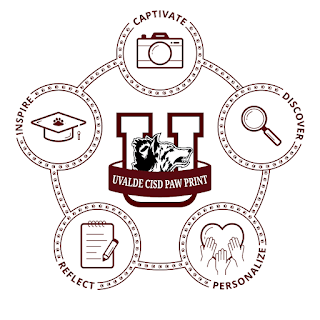
I have decided to "chunk" my course content into modules, based on the levels of understanding the learners need to build upon to reach mastery. For example, the foundation of blended learning truly is data-driven instruction, but in order for a teacher to understand our DDI cycle, they have to first understand our learning framework so they understand how to build the DDI cycle into their lesson planning. So, the teacher would need blended learning basics, then the learning framework, then DDI, and THEN, finally, they should have the capacity and knowledge to understand true blended/personalized learning as we have envisioned it for our district.  Each module will begin the same way, following our learning framework, with a thought-provoking discussion tied to a short video or quote to "Captivate" the learners, then it will move into "Discover" where the student gets the opportunity to learn more about the topic asynchronously through a series of videos a...

Online Course Design EDLD 5318 - Week 2 Reflection

The irony of taking a course on online course design right now is not lost on me. In my current role, I have the responsibility of training our teachers through our transition to our district learning management system, Schoology. My district announced this transition in August, but we were given the entirety of the Fall semester to learn and familiarize ourselves with the platform. During the fall, I focused on teaching our teachers how to create assignments, organize coursework, communicate, assign grades, sync the grade book, etc, on Schoology. These topics were all necessary for teachers to learn in order for them to learn Schoology, but as I have learned the content from the first two weeks in EDLD 5318, I have realized that simply teaching teachers how to organize was not enough.  It is not enough to simply tell teachers how to organize their courses. We gave them templates for organization, by week, by day, by unit. Every possible way. However, none of this matters, if teach...

Tying it All Together

WOW. I can't believe that my 7th course in the Educational Technology Leadership program is almost finished. When we started this course, I thought "This sounds like we are taking the same class over again." I was bummed but also wondering what I was missing. What I didn't realize then was that I would grow so much over the 5-week intensive course. Each week, I learned more and grew more in my understanding of the portfolio and the power it can truly hold.  Dani Fry, a classmate and member of my cohort, said something in our initial group meeting that I have not forgotten. She said that she has been using her ePortfolio for several years and that each time she has used it for an interview, she has gotten the job. She said that several of the people on her hiring committees have told her that her ePortfolio is what set her apart. This was powerful for me to learn from her.  As I move forward through this program and in my career, I want to leverage my ePortfolio and my...

Week 4 Reflection - Applying Educational Technology

As I reviewed the ePortfolios of prior DLL students, I couldn't help but feel less confident in my own. I have stuck to Google Sites because that is what I am comfortable with and what I know best. I felt that by sticking with what I know best I would be able to better highlight my achievements and projects. Now, I am not so sure. The one thing that was evident in every ePortfolio I previewed was that the students that created them OWNED THEM. This stuck with me after last week's discussion. Through these ePortfolios, I am able to tell who these students/individuals are, what is most important to them, and what their professional strengths are. I know that one thing I need to improve is my blog. I have struggled with this component, but I think this may be a very effective way to leverage my ePortfolio.  I did notice in some of these ePortfolios, though, that a blog component was missing. This also makes me wonder if I will truly utilize the blog once I am finished with my cour...

Week 3 Reflection - Applying Educational Technology

The concept of an ePortfolio has been around for several years, and it is something that I have always thought sounded great in theory, but ultimately seemed hard to accomplish - especially in a K-12 setting. The reason it has always felt unattainable is that there are so many factors to consider, and our students and teachers live in a world that revolves around standardized tests. Shifting the digital portfolio from compliance to ownership would be challenging. In reading Rikard's thoughts on the subject, the one line that stood out to me was "Gaining ownership over the data is vital—but until students see this domain as a space that rewards rigor and experimentation, it will not promote student agency" (Rikard, 2015). I, myself, have struggled with this exact concept as a student. It is difficult for me to see my ePortfolio as truly "mine" while it houses my assignments for my courses. I don't want to showcase my blog while it contains only pieces I have ...

Week 2 Reflection - Applying Educational Technology

The readings for this week were another reminder of how important it is that we embrace, as learners, what we expect our students to embrace as learners. However, when Dr. Harapunik said, "Grades simply do not reveal skills, knowledge and abilities. Students need to be able to show potential schools or employers what they can do and an eportfolio is one of the tools that many organizations will be looking for to see this evidence of learning and abilities" (Harapnuik, 2015), it also brought to mind the fact that ePortfolios in the world of standardized testing is novel. I love the idea of an ePortfolio and have truly valued being able to build it as I have moved through my graduate work. However, when I think about applying the concept of an ePortfolio in a classroom I struggle to think outside the box. I know that the COVA learning approach has been valuable to me and I know my students gave me their best work in the classroom when I gave them voice and choice in their own l...

Stop. Collaborate and Listen.

In week one of my most recent course, Applying the Concepts of Educational Technology, I had the opportunity to meet with some of my classmates and it was my most favorite activity since I began the Educational Technology Leadership program at Lamar.  Adrian, Dani, Alyssa, and Randrick are all classmates of mine that began this program at the same time I did. We have had every course together so far, so we have had opportunities to collaborate through discussion posts in each course, but there are no words for the amount of value that has been added to our educational experience by being able to meet virtually with them through Google Meet.  In our meeting, we spoke candidly about how things were going in our respective jobs and lives at this time. Dani recently got a promotion at work, so we celebrated her accomplishment. Alyssa's school has been struggling in the remote learning environment, so we offered some advice to help her out. It was a great conversation and a breath ...

What's the Deal with PLNs?

Image
I have found some of the best ideas throughout my career through professional learning networks. I am a member of several professional learning networks and have learned a great deal from communicating with others through them. Three of the networks that I am most currently active in are   Teaching with Schoology  and  2ndaryELA  on Facebook, and the T EA Blended Learning Grant Program   Channel on Slack. Additionally, I also participate in learning networks for my role as a mother of twins, a mother of 3 children 2 and under, a resident of my neighborhood, and a mom in the town I currently live in.  I have definitely grown as a member of these learning networks over time and I take and give them all in different ways. For example, the Teaching with Schoology Group is a group that I "take" more from than anything as teachers share helpful resources and tools that can aid in ensuring I offer quality support to the teachers I support in my district. Howe...

Personalized Learning: Is it for Real?

Image
During my time in the classroom, I often felt torn when it came time to post grades. I struggled when the times came that I had a student failing with whether or not this was a true representation of their progress. I also couldn't help but wonder if I had truly done everything I could to set them up for success. Often times during this time of reflection, the answer was no. I hadn't done everything possible. I could have called home more, given more verbal reminders, scaffolded, and differentiated better. The problem was, as a secondary ELAR teacher in a co-teach class where 40% of my students had IEPS in a Title I district, this seemed impossible. I know that I was working hard. Doing absolutely everything I could possibly think of that was attainable given the cards I was dealt. In my lesson planning and prep, I prioritized student engagement. I worked endlessly to find the best platforms and programs to engage my students and pique their interests. I sought training and PD ...

Growth Mindset Plan

Image
  A mindset is a powerful tool in the journey towards achievement and success. As educators, we must be committed to a growth mindset in order to truly improve our practice and help redefine and transform the learning experience for students. Virtually every person in the world has combinations of fixed and growth mindsets at various times. It is vital that we design a plan that will help us achieve a growth mindset in whatever path we decide to take on in life.  My personal goal at this time is to grow as an effective instructional leader by defining and improving the blended learning experience for the students of Uvalde CISD. In order to do this, I will follow the four steps defined by Carol Dweck and commit to three additional key action steps. These action steps are relevant to me and my personal goals as they address the issues that I hope to grow the most in, creating a collaborative culture, improved data-driven instruction practices, and helping others as an instructi...